The Morning After the Holidays
For one whole month, the Jewish year carries us on its shoulders. We stand trembling on Rosh Hashanah, come out cleansed on Yom Kippur, eat and sit under the stars in the sukkah, and then dance with the Torah scrolls on Simchat Torah. It is as if we were invited into the King’s palace and told to stay as long as we liked.
Then the music stops. The sukkah comes down, the synagogue empties out, and the calendar turns to Rosh Chodesh Mar Cheshvan, the new moon of Cheshvan, the only month of the year with no holiday and no fast day. Tradition even gives it a nickname: Mar (מַר), which means “bitter.” Some say the name reflects the cold autumn rains and the shortening days. The Chassidic masters hear something more personal. After a month in the palace, we have been walked back out to the street: to work, to bills, to routine, and to the same old temptations.
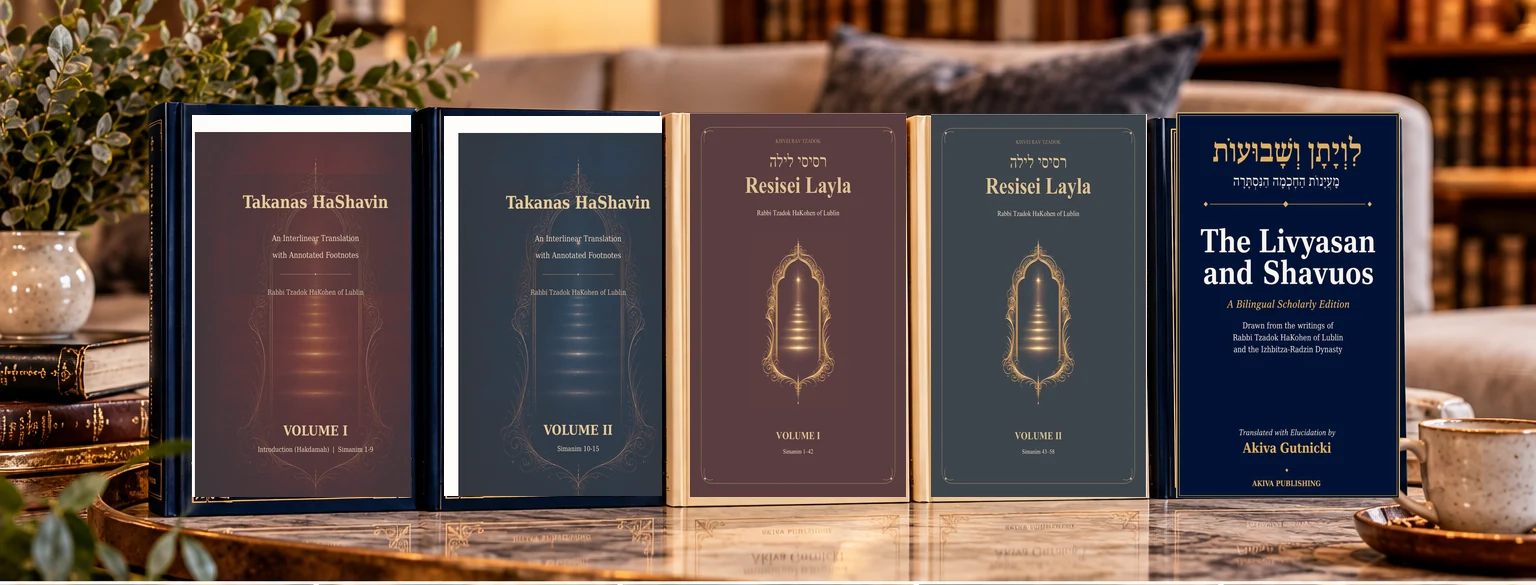
And here is the surprise. At exactly this moment, the Torah doesn’t let us coast. In the very same days, we begin reading it again from the top, with Parashat Bereishit, the story of Creation. That timing is no accident. According to Rabbi Tzadok HaKohen of Lublin (author of Pri Tzaddik, Tzidkat HaTzadik, Takanat HaShavin, Resisei Layla, and more) and the Izhbitza-Radzin teachers who shaped his thinking (Mei HaShiloach, Beit Yaakov, Tiferet Yosef, Sod Yesharim), the letdown of Cheshvan is not a flaw in the plan. It is the plan.
Their claim, in a single sentence: the darkness, the confusion, the wild pull of desire, and even the bitter taste of feeling far from God were never mistakes that God had to live with. He built them into the world on purpose, as the raw material for our spiritual growth.
This essay follows that idea from the first verses of the Torah to the first rainy days of Cheshvan. Along the way we will meet the yetzer hara, the “evil inclination,” the inner drive that pulls us toward desire, ambition, and self-interest, and see why these teachers treat it not as an enemy to be destroyed but as a fire to be redirected. We will see how teshuvah me-ahavah, repentance born of love, can turn even deliberate wrongdoing into merit; how Shabbat reveals that all of it was tov me’od, “very good”; and how, in the end, we can flip the letters of Mar (מַר) into Ram (רָם), “lofty and exalted.”
A Fire Built into the Foundation
To Chassidic thinkers, the Torah’s first word, Bereishit (בְּרֵאשִׁית, “In the beginning”), is more than a time stamp. It is a seed packet. The Tikkunei HaZohar, a classic Kabbalistic text, shuffles its six letters into new phrases, each one revealing a purpose of Creation, and Rabbi Tzadok draws on this at the opening of his Pri Tzaddik on the parashah. Two of these rearrangements matter most for us: Yarei Boshet (יָרֵא בֹּשֶׁת), “one who is in awe and ashamed to sin,” and Brit Eish (בְּרִית אֵש), the “covenant of fire.” Here is what Rabbi Tzadok says about the second:
“So too Brit Eish, the ‘covenant of fire.’ The main purpose of Creation was also to guard the covenant, as it says (Proverbs 10:25): ‘The righteous is the foundation of the world.’ And as the holy Zohar teaches (I, 93a), once a Jew is circumcised on the eighth day, we are bound to holiness at our very root. Our true desire is only to do His will, blessed be He, and that is why the Jewish people are called tzaddikim, ‘righteous.’ Even if some flaw shows up afterward, it comes only from the leaven in the dough.”
וְכֵן “בְּרִית אֵשׁ”, כִּי תַּכְלִית מְכֻוָּון הַבְּרִיאָה הָיָה גַּם כֵּן עֲבוּר שְׁמִירַת הַבְּרִית, כְּמוֹ שֶׁנֶּאֱמַר: “וְצַדִּיק יְסוֹד עוֹלָם”. וּכְמוֹ שֶׁכָּתוּב בַּזֹּהַר הַקָּדוֹשׁ (חֵלֶק א, צג עַמּוּד א), דְּכֵיוָן דְּאִתְגְּזַר, שֶׁנִּימּוֹל לִשְׁמוֹנָה, אֲנַחְנוּ מְדוּבָּקִים בִּקְדוּשָּׁה בַּשּׁוֹרֶשׁ, וּרְצוֹנֵנוּ רַק לַעֲשׂוֹת רְצוֹנוֹ יִתְבָּרַךְ, וּלְזֶה נִקְרְאוּ “צַדִּיקִים”. וְאַף אִם יֵשׁ אַחַר כָּךְ אֵיזֶה חִסָּרוֹן, הוּא רַק מִצַּד הַשְּׂאוֹר שֶׁבָּעִיסָּה.
— Pri Tzaddik, Bereishit
Read that last line slowly. At the deepest level, every Jew wants nothing more than to do what God wants. Rabbi Tzadok develops this in Yisrael Kedoshim and Dover Tzedek: the core of the soul is pure and cannot be broken. What we call temptation or failure is not who we really are. It is the se’or she-ba-isah, “the leaven in the dough,” the Talmud’s own image (Berakhot 17a) for the foreign, puffing-up force that works on the heart from the outside.
That is also why the Torah describes the inner struggle as a war. Citing Rabbi Simcha Bunim of Peshischa, Rabbi Tzadok reads the verse “When you go out to battle against your enemies” (Deuteronomy 21:10) as a hint to the fight within, since the Talmud (Sukkah 52a) actually calls the evil inclination “the enemy.”
But notice the image the Torah’s letters give us. This covenant is not a covenant of water, or of stone. It is a covenant of fire. Fire is powerful, double-edged, and explosive. The same flame that warms a home can burn it to the ground. Left to run wild, passion consumes. Rabbi Tzadok says this is the deeper meaning of a famous line in Pirkei Avot 4:2, “The reward of a sin is a sin”:
“It is called a ‘covenant of fire’ because whoever follows the lust of his heart is sentenced to the fire of Gehinnom, as our Sages taught (Pirkei Avot 4:2): ‘The reward of a sin is a sin.’ That is, the fire of Gehinnom is itself made out of the sin, as it says (Isaiah 33:11): ‘Your own breath is a fire that will consume you.’”
וְנִקְרָא “בְּרִית אֵשׁ”, כִּי הַהוֹלֵךְ אַחַר תַּאֲוַת לִבּוֹ נִידּוֹן בְּאֵשׁ שֶׁל גֵּיהִנָּם, כְּמוֹ שֶׁאָמְרוּ (פֶּרֶק ד דְּאָבוֹת מִשְׁנָה ב): “וּשְׂכַר עֲבֵירָה – עֲבֵירָה”, וְהַיְינוּ כִּי מֵהָעֲבֵירָה עַצְמָהּ נַעֲשֶׂה הָאֵשׁ שֶׁל גֵּיהִנָּם, כְּמוֹ שֶׁנֶּאֱמַר: “רוּחֲכֶם אֵשׁ תֹּאכַלְכֶם”.
— Pri Tzaddik, Bereishit
Think about what this means. Gehinnom, the place of spiritual cleansing after death that is often translated as “hell,” is not a torture chamber someone else builds for us. It is what happens when holy energy gets pointed in the wrong direction. The intensity we pour into a wrong act is the very fire that later burns.
Now flip it around, and you get one of the most hopeful ideas in this whole essay. If the fire’s source is holy, rooted in the primal “covenant of fire” of Bereishit itself, then that same fire can be won back. When it is guarded, focused, and sanctified through Torah, raw desire stops being a weapon against us and becomes the engine of our deepest longing for God.
Why Would God Create Darkness?
The Torah’s second verse drops us into a mess: “The earth was tohu va-vohu, formless and empty, and darkness was on the face of the deep” (Genesis 1:2). Most of us read this as the problem God is about to fix. Chaos and darkness: obstacles to be cleared away.
Rabbi Yaakov Leiner of Izhbitza, in his Beit Yaakov, sees it differently. Darkness, he says, is not merely the absence of light. It is a creation in its own right, with a job to do.
“‘And darkness was on the face of the deep.’ In truth, the darkness is also a creation of Hashem, blessed be He. That is, only after light was created was there a recognition that what had existed until then was darkness. Before the light, there was no such recognition.”
וְחֹשֶׁךְ עַל פְּנֵי תְהוֹם. בֶּאֱמֶת הַחֹשֶׁךְ הוּא גַּם כֵּן בְּרִיאָה מֵהַשֵּׁם יִתְבָּרַךְ. וְהַיְינוּ אַחַר שֶׁנִּבְרָא הָאוֹר הָיָה הַכָּרָה שֶׁמַּה שֶּׁהָיָה עַד עַתָּה הָיָה חֹשֶׁךְ, וְקֹדֶם הָאוֹר לֹא הָיָה הַכָּרָה.
— Beit Yaakov on the Torah
Think of stepping out of a dark movie theater into afternoon sun. You don’t appreciate light in the abstract; you appreciate it against the dark. The Beit Yaakov’s point is that we can only recognize, understand, and absorb light because we know what it replaced. So God wove choshech (darkness) into the foundations of the world, to give light something to stand out against.
Rabbi Yosef of Radzin, in Tiferet Yosef, adds that tohu va-vohu is also a portrait of us. Every person begins their spiritual journey in confusion, pulled by drives they haven’t yet sorted out and impulses that don’t yet fit together.
Rabbi Tzadok goes deeper into this inner darkness in Resisei Layla (§35). He links it to the deep sleep that fell on Adam, the first human, and names the evil inclination’s real weapon. It isn’t clever arguments against God. It is dimyon: imagination run wild, getting lost in daydreams, fantasies, and illusions until we forget who we are and Who is watching.
“Satan and the evil inclination are one and the same, and the essence of the evil inclination is nothing but sinking into imagination, which does not let a person remember [God] … For Hashem, blessed be He, established in His world, among the angel-like forces within a person, this force of sleep, of sitting idle like a sleeper, which is being stuck in imaginings.”
הוּא שָׂטָן הוּא יֵצֶר הָרָע, וְעִקַּר יֵצֶר הָרָע אֵינוֹ אֶלָּא הַהַשְׁקָעָה בַּדִּמְיוֹן שֶׁאֵינוֹ מַנִּיחוֹ לִזְכּוֹר… שֶׁיָּסַד הַשֵּׁם יִתְבָּרַךְ בְּעוֹלָמוֹ בִּכְלַל הַמַּלְאָכִים שֶׁהֵם כֹּחוֹת הָאָדָם יֵשׁ גַּם כֹּחַ זֶה דְּשֵׁינָה וְיוֹשֵׁב בָּטֵל כְּיָשֵׁן שֶׁהוּא הִשְׁתַּקְּעוּת בְּדִמְיוֹנוֹת.
— Resisei Layla §35
Why would God build a capacity for illusion into us? In Machshavot Charutz and Ohr Zarua LaTzadik, Rabbi Tzadok answers: for the sake of free will. If God’s presence blazed in plain sight every moment, no one could sin. But no one could truly choose either, and so no one could achieve anything real. A world without fog has no explorers.
There is one more layer. Kabbalah teaches tzimtzum, that God “contracted” the infinite light to make room for a world. Rabbi Tzadok, in Kometz HaMinchah, treats that empty space as the arena of human effort. It is the place where the choshech lives, and where we do our work: pushing back the fog of imagination and building a stable home for God’s presence in the world.
“Very Good”: Even the Evil Inclination?
This brings us to one of the Torah’s most puzzling lines. After each stage of Creation, God looks and calls it “good.” But on the sixth day, once humanity and all our appetites have arrived, the verse says: “God saw everything that He had made, and behold, it was very good (tov me’od)” (Genesis 1:31). Why the upgrade?
A famous Midrash (Bereishit Rabbah 9:7) answers with a jolt:
“Rabbi Nachman bar Shmuel bar Nachman said in the name of Rabbi Shmuel bar Nachman: ‘Behold, it was good’: this is the good inclination. ‘And behold, it was very good’: this is the evil inclination. Can the evil inclination really be called ‘very good’?! Yes! For without the evil inclination, a man would not build a house, marry a wife, have children, or do business. And so Solomon says (Ecclesiastes 4:4): ‘It is a man’s rivalry with his neighbor.’”
רַבִּי נַחְמָן בַּר שְׁמוּאֵל בַּר נַחְמָן בְּשֵׁם רַב שְׁמוּאֵל בַּר נַחְמָן אָמַר: הִנֵּה טוֹב מְאֹד, זֶה יֵצֶר טוֹב. וְהִנֵּה טוֹב מְאֹד, זֶה יֵצֶר רָע. וְכִי יֵצֶר הָרָע טוֹב מְאֹד, אֶתְמְהָא?! אֶלָּא שֶׁאִלּוּלֵי יֵצֶר הָרָע, לֹא בָּנָה אָדָם בַּיִת, וְלֹא נָשָׂא אִשָּׁה, וְלֹא הוֹלִיד, וְלֹא נָשָׂא וְנָתַן. וְכֵן שְׁלֹמֹה אוֹמֵר (קהלת ד): כִּי הִיא קִנְאַת אִישׁ מֵרֵעֵהוּ.
— Bereishit Rabbah 9:7
Ordinary ethics says the evil inclination is simply bad, and the goal is to get rid of it. The teachers of Izhbitza, Radzin, and Lublin disagree. In Mei HaShiloach, Rabbi Mordechai Yosef Leiner describes the yetzer hara as the raw, concentrated life-force (chiyus) of the physical world: the drive to build, to earn, to compete, to leave something behind. Without it, human society would sink into apathy.
Angels, by the way, have no yetzer hara, and for exactly that reason they are stuck exactly where they are. They cannot grow or truly change. We can, because we carry an inner friction, an explosive reserve of passion that can be aimed at devastation or at holiness.
This leads to the boldest teaching of the school, which Rabbi Tzadok states with real courage in Tzidkat HaTzadik (§40):
“The essence of repentance is that Hashem lights up a person’s eyes so that deliberate sins become like merits. That is to say, he recognizes and understands that everything he did wrong was also, somehow, within the will of Hashem, blessed be He.”
עִקַּר הַתְּשׁוּבָה הוּא עַד שֶׁיָּאִיר ה' עֵינָיו שֶׁיִּהְיוּ זְדוֹנוֹת כִּזְכִיּוֹת, רוֹצֶה לוֹמַר: שֶׁיַּכִּיר וְיָבִין שֶׁכָּל מַה שֶּׁחָטָא הָיָה גַּם כֵּן בִּרְצוֹן הַשֵּׁם יִתְבָּרַךְ.
— Tzidkat HaTzadik §40
To be clear, this is not permission to sin. Before we act, we are fully responsible, free to choose, and bound by Jewish law (halakhah). The insight belongs to the looking back. For someone who has truly returned to God, there can come a moment when God opens their eyes to see that even the fall, the failure, the descent into darkness, was folded into the healing of their soul. The sin shattered their self-satisfaction. It cracked their pride and created a thirst for closeness with God that a person who never stumbled, who stayed safely “righteous,” might never feel. In that moment the past is not erased but reclaimed, and the yetzer hara is revealed as what it always was: tov me’od.
Eden: The Tree of Doubt and the Gift of Death
How did this pure, creative drive get so tangled up? For that we have to go back to Eden.
Before eating the forbidden fruit, Adam and Chava (Eve) lived in direct clarity. They were “naked” (arumim) and felt no shame, because their bodies were like transparent clothing for their souls. The yetzer hara was entirely outside them, personified by the snake.
Rabbi Mordechai Yosef Leiner gives the forbidden tree a surprising name. In Mei HaShiloach he calls the Tree of Knowledge of Good and Evil the Ilana de-Sfeika, the Tree of Doubt:
“The Tree of Knowledge means a person who lives in doubt … And so the Holy One, blessed be He, created the Tree of Doubt, which is the Tree of Knowledge of Good and Evil, so that a person would serve Hashem, blessed be He [even amid uncertainty].”
וְעֵץ הַדַּעַת הַיְינוּ מִי שֶׁהוּא בְּסָפֵק… וּלְכָךְ בָּרָא הַקָּדוֹשׁ בָּרוּךְ הוּא אִילָנָא דִּסְפֵיקָא שֶׁהִיא עֵץ הַדַּעַת טוֹב וָרָע, שֶׁיַּעֲבֹד הָאָדָם אֶת הַשֵּׁם יִתְבָּרַךְ.
— Mei HaShiloach
The original plan, in other words, was for humans to face uncertainty, live with ambiguity, and freely set aside their own understanding out of loyalty to God, refining their character in the process. But Adam and Chava ate before Shabbat had been sanctified. They took it too early, and the doubt moved inside. In Pri Tzaddik (Bereishit §4), Rabbi Tzadok explains what changed:
“The matter is this: by eating from the Tree of Knowledge, good and evil became mixed together. Had he then also eaten from the Tree of Life, the good within him would have earned him the right to eat and live forever, but the evil within him would have grown stronger each time. So death was truly necessary: to separate the evil from the good, leaving the evil to the wicked, while the righteous inherit the good.”
אַךְ הָעִנְיָן, שֶׁעַל יְדֵי שֶׁאָכַל מֵעֵץ הַדַּעַת נַעֲשָׂה הָעִרְבּוּב טוֹב וָרָע, וְאִם הָיָה אוֹכֵל גַּם מֵעֵץ הַחַיִּים אַחַר כָּךְ, הָיָה הַטּוֹב שֶׁבּוֹ זוֹכֶה שֶׁיֹּאכַל וְיִחְיֶה לְעוֹלָם וְהָרַע שֶׁבּוֹ הָיָה מִתְגַּבֵּר בְּכָל פַּעַם. וּבֶאֱמֶת נִצְרָךְ הַמִּיתָה לְהָרַע לְהַפְרִיד הָרַע מִן הַטּוֹב וְיוּשְׁאַר לָרְשָׁעִים, וְהַטּוֹב יִרְשׁוּ צַדִּיקִים.
— Pri Tzaddik, Bereishit §4
This changes how we see mortality. Death is not God’s angry sentence; it is an act of mercy. After the fruit, evil was no longer a voice outside us. It was woven into our thoughts, our blood, and our wants. Picture that tangled mixture made immortal: an endless civil war inside the soul, forever. Death works like a sieve (berur). The body, marked by the “leaven in the dough,” returns to the dust, and the purified soul is free to inherit eternal life.
The first sin also happened through the mouth, an impulsive, unrefined swallowing of the physical world. Rabbi Tzadok develops this in Machshavot Charutz and Et HaOchel. So the lifelong work of being human is to make eating and all our bodily desires holy, undoing the snake’s poison by turning physical pleasure into a vessel for serving God.
Cheshvan: The Flood’s Leftover and the Temple’s Victory
Now the connection to the calendar comes into focus. The reality set up in Bereishit frames exactly what we feel as Cheshvan begins. The warmth of the festivals fades, the sky turns gray, the temperature drops, and we face the ordinary struggle with our own nature with no holiday to lean on.
The Prophets point to a deeper layer. The Book of Kings (I Kings 6:38) calls this month Yerach Bul (יֶרַח בּוּל). Our Sages connect Bul with Mabul, the Great Flood, which began on the seventeenth day of the month (Genesis 7:11). In his Pri Tzaddik for Rosh Chodesh Cheshvan, Rabbi Tzadok cites a striking teaching:
“Until King Solomon finished building the Temple, an imprint of the judgment of the generation of the Flood remained in the world. As our Sages taught (Midrash Tanchuma, Bereishit 11), every year in the month of Cheshvan the waters would rush destructively for forty days. That is why Kings calls the month Yerach Bul, without the letter mem (which stands for forty), once the Temple was complete: when the Temple was finished, the forty days of the Flood’s lingering judgment came to an end.”
וְעַד גְּמַר בִּנְיַן הַבַּיִת עַל יְדֵי שְׁלֹמֹה הַמֶּלֶךְ עָלָיו הַשָּׁלוֹם, הָיָה רוֹשֶׁם מִשְׁפַּט דּוֹר הַמַּבּוּל בָּעוֹלָם, וּכְמוֹ שֶׁאָמְרוּ (תַּנְחוּמָא בְּרֵאשִׁית יא) שֶׁבְּכָל שָׁנָה בְּחֹדֶשׁ חֶשְׁוָן הָיוּ מ' יוֹם הַמַּיִם שׁוֹטְפִים, וְלָכֵן נִקְרָא חֹדֶשׁ חֶשְׁוָן בִּמְלָכִים בִּגְמַר בִּנְיַן הַבַּיִת “יֶרַח בּוּל” בְּלֹא מ', שֶׁבִּגְמַר בִּנְיַן הַבַּיִת פָּסְקוּ הַמ' יוֹם רוֹשֶׁם מִשְׁפַּט הַמַּבּוּל.
— Pri Tzaddik, Rosh Chodesh Mar Cheshvan
See the symmetry Rabbi Tzadok finds here. The generation of the Flood twisted human desire, letting it spill over every boundary into corruption without limits. They abused the waters of creation, and so judgment came as raging water that scoured the earth for forty days. Each year, a trace of that judgment lingered in the month of Cheshvan, a built-in harshness, a kind of spiritual vulnerability.
Then Solomon finished the First Temple in this very month. The Beit HaMikdash, the Holy Temple, was the place where sacred fire consumed the offerings and God’s Presence (Shechinah) had a home on earth. Fire against flood! The destructive waters were neutralized. The mem of Mabul (מַבּוּל), the forty days of judgment, dropped away, leaving Bul (בּוּל): a month of renewal, when the life-giving winter rains, geshem shel berachah (“rain of blessing”), begin to nourish the Land of Israel.
The Radzin school, in Sod Yesharim, calls this the “sweetening of judgments,” taking something harsh and turning it sweet. The month is called Mar (מַר), “bitter,” but the same two letters, flipped, spell Ram (רָם), “lofty and sublime.” The spiritual task of Cheshvan is therefore not to mourn the holidays that left. It is to walk straight into the unpolished, bitter reality of everyday life and uncover the Ram hidden inside the Mar.
Rabbi Tzadok’s Poked Akarim adds a beautiful image. In nature, barrenness and cold come before birth and growth. Cheshvan looks empty of holidays precisely because it is a womb, the place where the inner light of the whole year has to be formed through daily, personal effort.
Teshuvah from Love
All of this comes together in Rabbi Tzadok’s treatise on repentance, Takanat HaShavin (“The Repair of the Returnees”). Start with the Talmud (Yoma 86a), which describes two levels of teshuvah, “return” or repentance:
• Teshuvah out of fear (teshuvah me-yirah). A person repents out of fear of punishment. Their deliberate sins (zedonot) are downgraded to the status of accidents (shegagot). The damage is contained, but the stain of the past remains.
• Teshuvah out of love (teshuvah me-ahavah). A person repents out of overwhelming love and longing for God. Their deliberate sins become like merits (zechuyot).
In Takanat HaShavin (chapters 5 and 10), Rabbi Tzadok asks the obvious question: how? How can an act of rebellion against God turn into something good?
His answer starts with what a sin actually takes. A serious temptation is never a matter of apathy. It runs on energy, ingenuity, determination, and burning desire (chiyus de-ratzon, the “life-force of the will”). That drive is the raw power of the yetzer hara at full strength.
When someone is struck by teshuvah me-ahavah, they don’t try to snuff out that passion. That would leave them numb and spiritually flat. Instead, they take that exact measure of intensity and aim it at God and Torah. Rabbi Tzadok illustrates this with King David’s words in Psalm 23, in Pri Tzaddik (Bereishit §11):
“And about this he said, ‘for You are with me’ (Psalm 23:4): that the evil inclination itself becomes chamidu de-oraita, a burning desire for Torah, ‘and I will dwell in the house of Hashem for length of days.’”
וְעַל זֶה אָמַר: “כִּי אַתָּה עִמָּדִי”, שֶׁיְּהֵא נַעֲשֶׂה מֵהַיֵּצֶר הָרָע חֲמִידוּ דְּאוֹרַיְיתָא, “וְשַׁבְתִּי בְּבֵית ה' לְאֹרֶךְ יָמִים”.
— Pri Tzaddik, Bereishit §11
Chamidu de-oraita is Aramaic for coveting the Torah. The very craving that once led to a moral collapse is now pointed at divine wisdom.
And that is how the past is reclaimed. The fuel of the sin, the sheer intensity of the human will, now serves God. The person is no longer the same, either. Without that descent, they would never have found that volcanic depth, nor the real humility that now drives their service. The sin has become a springboard.
Rabbi Tzadok ties this to the Oral Torah (Torah she-be-al peh) in Likkutei Maamarim and Divrei Soferim. The Written Torah is pure divine light, descending from above. The Oral Torah, meaning the Talmud, the debates, and the living give-and-take of Jewish law, grows from human effort and from wrestling with the messy realities of the material world. That is why the Talmud says that “in the place where penitents stand, even the completely righteous cannot stand” (Berakhot 34b). The completely righteous person has known only the clean light of the Written Torah. The ba’al teshuvah, one who has returned, has gone down into the mud, grabbed the fiery fuel of the yetzer hara, and woven it into the living crown of the Oral Torah.
Shabbat Bereishit: Where the Light Comes Back
How do we hold all of this together, week after week? The Torah’s answer is Shabbat. Creation ends not with a flourish but with rest: “God blessed the seventh day and made it holy, because on it He rested from all His work that God had created la’asot” (Genesis 2:3). That last word is usually translated “to make.” The Sages and the Radzin masters read it as: which God created for us to repair and complete. God deliberately left the world unfinished, with its formlessness and its darkness, so that we could become partners in Creation.
Shabbat is where the repair shows. One way this teaching is often put: Shabbat is where we turn choshech (darkness) and the yetzer hara into tov me’od. That is why we say, “And He rested on the seventh day from all His work” (va-yishbot ba-yom ha-shevi’i mi-kol melachto).
During the six working days of the week, which correspond to the six millennia of the world’s history and to another rearrangement of Bereishit, Bara Shis (“He created six”), we are busy with berurim, the sorting and clarifying of good from bad. We wrestle with the yetzer hara. We live with the cold ambiguity of the Tree of Doubt. We find our way through a confusing mixture of good and evil.
Then Shabbat arrives, and the soul enters a different kind of awareness. In Pri Tzaddik (Bereishit §4), Rabbi Tzadok says that on Shabbat the Ohr HaGanuz, the hidden light, stored away since the very first day of Creation, shines on the souls of the righteous.
In that light, the illusions of the week dissolve. The pleasures of Shabbat, such as fine food, rest, and clean clothes, are not concessions to appetite. They are acts of divine service. On Shabbat even the body is lifted up, and the yetzer hara is quieted, joining the yetzer hatov, the good inclination, in praising the Creator. The darkness of the earlier days is lit up in hindsight. Every struggle and every fall turns out to have been prepared for this rest.
From Mar to Ram
So here we stand at the start of the long, cold winter, facing ordinary days with no festival to shelter us. Our first reaction is fatigue. The world looks dark, the yetzer hara looks formidable, and life tastes bitter: Mar.
But the Torah opens by announcing that this very physical world, with all its mess, is where Creation’s purpose lives. The yetzer hara is not a rival power to God. It is His loyal servant in disguise, planted in the heart to give us the fire that great things require. Channeled through the covenant of fire (Brit Eish), that passion becomes the greatest engine of holiness. And when we stumble, teshuvah me-ahavah gives us a way to take that very fire, aim it at Hashem, and turn our past into shining merit.
As Mar Cheshvan begins and the rains start to fall, the call of the hour is to follow King Solomon: to enter the month of Bul, face what is left of the Flood, and build a lasting sanctuary of holiness right in the middle of the ordinary. Carry the peace of Shabbat Bereishit into the weekdays, and the letters turn over: Mar (מַר) becomes Ram (רָם), bitter becomes lofty.
In doing so, we fulfill the purpose of Creation. We stand as witnesses beside the Creator, declaring that even the darkness, even the struggle, even the yetzer hara, is at its root tov me’od: very good.